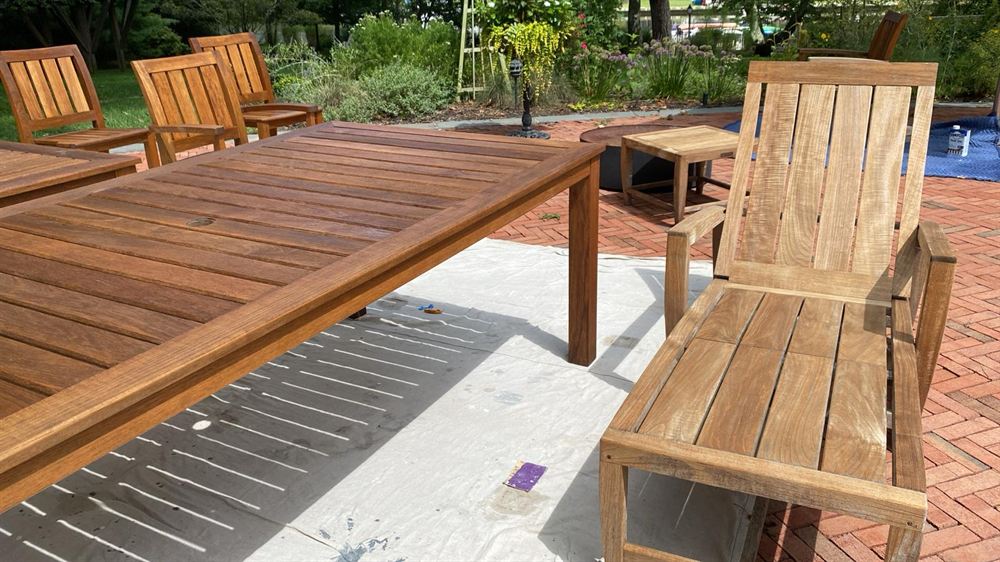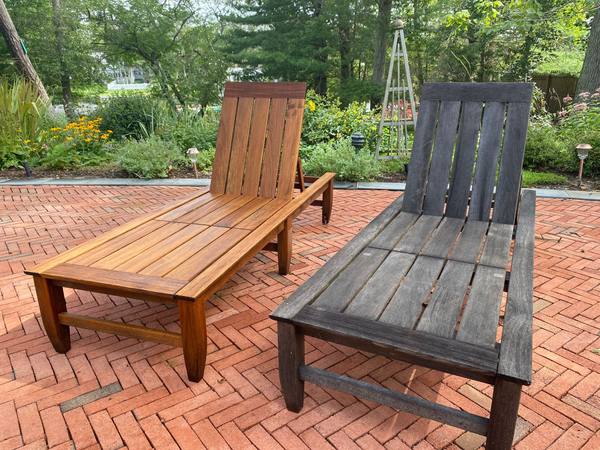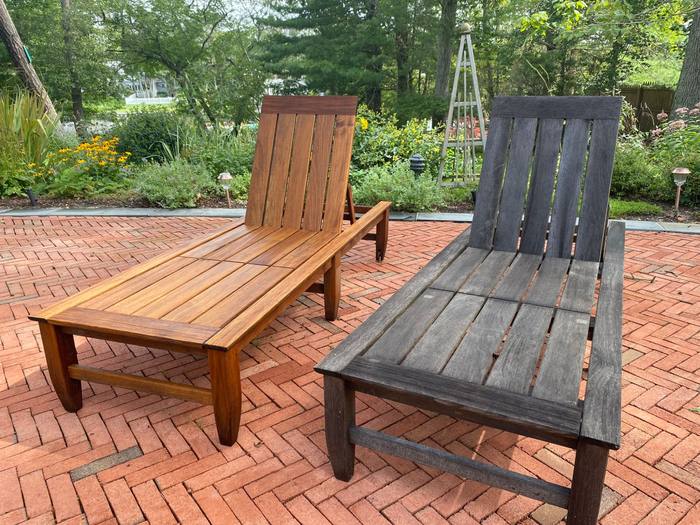
A teak dining set costs more than most people spend on a whole room of indoor furniture, and after three seasons on an East End terrace it is grey, dry and looks finished. It usually is not. Teak silvers on the surface and stays structurally sound underneath for decades — the wood is fine, the surface needs work.
We restore teak and hardwood outdoor furniture at homes in Southampton, East Hampton, Sagaponack, Sag Harbor and across The Hamptons — dining sets, chaise lounges and benches — along with the exterior wood that falls between trades: cedar gates, pergolas, outdoor showers, shutters, and solid wood entry doors.
Teak: silver or golden, both are correct
Teak is full of natural oil, which is why it survives outdoors untreated for decades. Left alone it goes soft silver-grey. That is not damage and plenty of owners want exactly that — it suits a house near the water.
If you want the golden-brown back, it is a two-stage process: a teak cleaner to lift the grey and the embedded dirt, then a brightener to even the tone. From there you either seal it, which holds the color for roughly a season and needs redoing annually, or leave it clean and let it re-silver evenly.
One thing worth knowing: teak oil is largely a marketing name. Most products sold as teak oil are linseed or tung oil blends, and on already oil-rich teak they can sit on the surface, stay slightly tacky, and feed mildew. A proper teak sealer is usually the better choice, and on many pieces the honest answer is to clean it and leave it alone.
Gates, pergolas and the things nobody quotes
Cedar gates take weather from both sides and are attached to posts that move with the ground. Pergolas sit in full sun all day with no shade of their own. Outdoor showers deal with constant water and almost no drying time. These fail faster than anything else on the property and they are usually the last thing anyone addresses.
They are also mostly hand work — a gate with vertical slats is a lot of edges — which is why many crews would rather not quote them. We do, because they are what people actually look at on the way to the house.
Entry doors
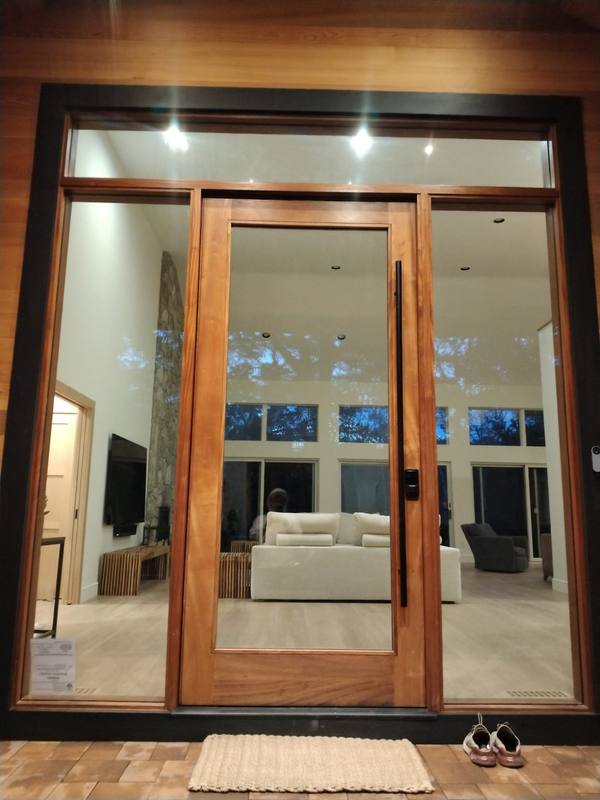
A south-facing solid wood front door is one of the most punished surfaces on any house. Direct sun all afternoon, wind, salt, and it moves with the seasons. A varnished door on an exposed elevation can start yellowing and lifting within two years.
Restoring one properly means stripping the failed finish, sanding back to clean wood, and rebuilding with a marine-grade or spar system — multiple thin coats, each sanded between, with a UV inhibitor. It is slow, and on a good door it is worth it. The alternative is a door that looks tired on the most visible part of the house.
How we work
Assess
We look at the species, the existing finish and the condition, and tell you honestly whether restoring is worth it.
Clean
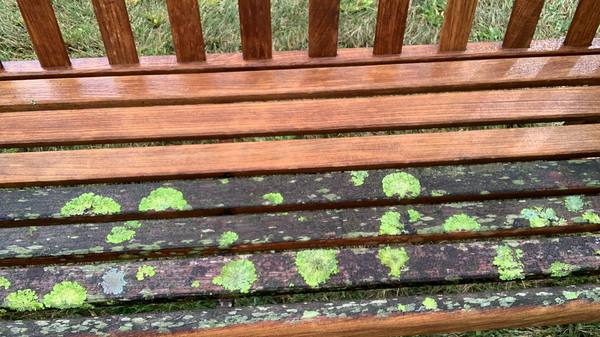
The correct cleaner for the wood, lifting grey, mildew and embedded dirt without bleaching the fibers.
Brighten and neutralize
Acid brightener evens the tone, restores the natural color and opens the grain.
Strip or sand where needed
Failed varnish, flaking sealer and old film removed back to sound wood.
Finish
Sealer, penetrating oil or a spar system depending on the piece and how you use it.
Aftercare
We tell you what the piece needs and when, so you are not restoring it from grey again in three years.
Where we work
We are based in Hampton Bays and restore outdoor furniture and exterior wood across the whole East End, from Westhampton and Quogue to Southampton, East Hampton and Montauk. Estimates are free everywhere we serve, with no travel charge.