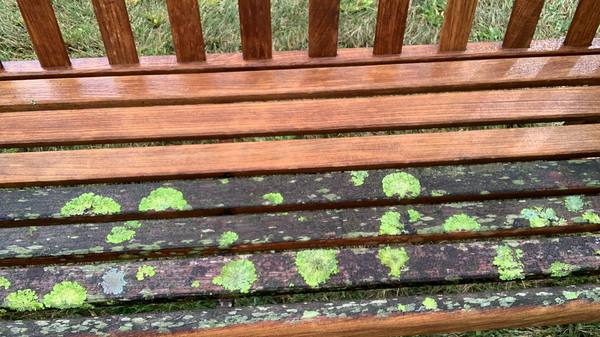
Horizontal wood takes punishment nothing else on the house does. It holds standing water instead of shedding it, takes UV straight down for the whole day, and gets walked on wet. That is why a deck needs recoating on a completely different schedule than the siding — and why a coating designed for siding fails quickly on a deck floor.
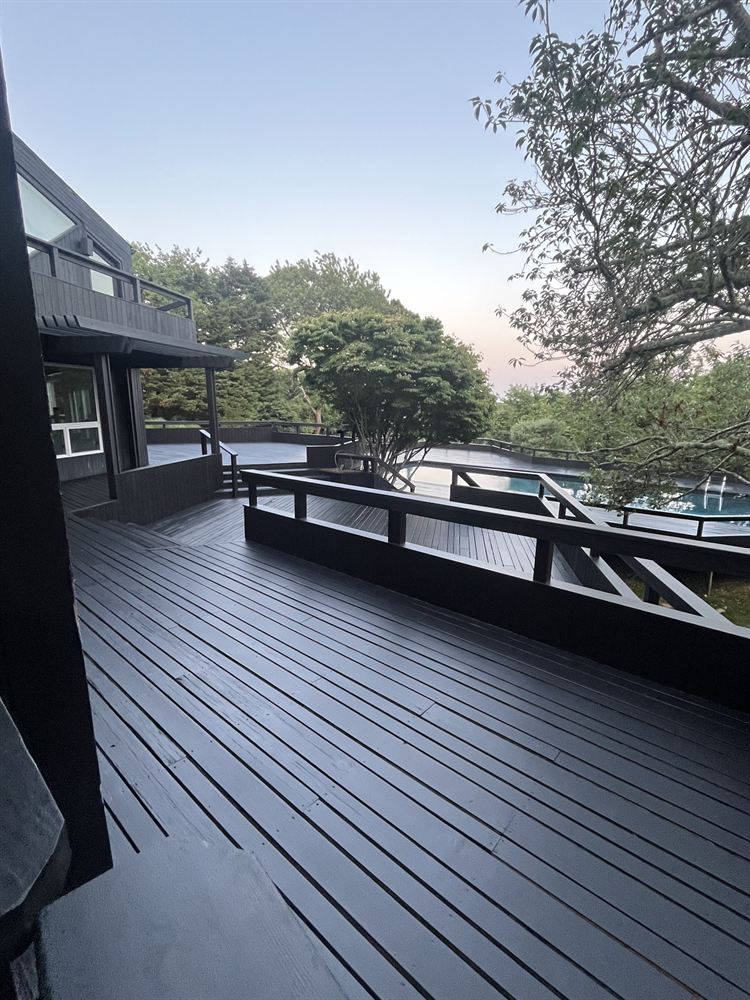
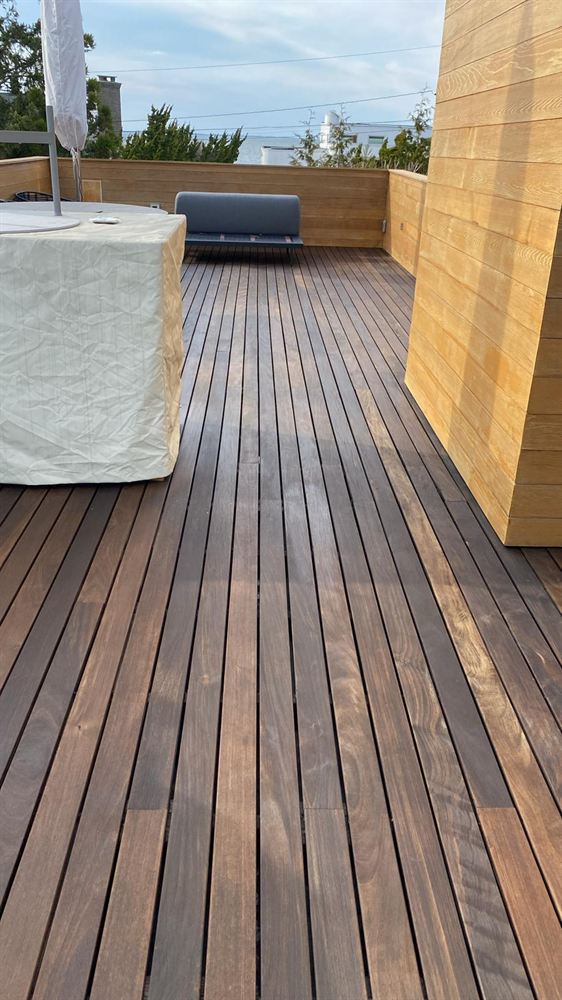
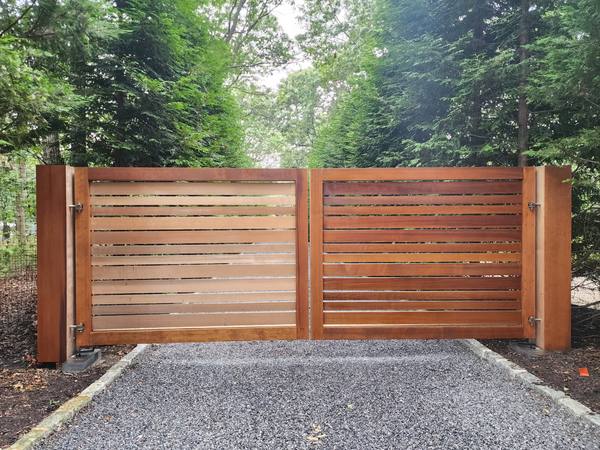
We stain, seal and restore decks across the East End — from pressure-treated platforms in Hampton Bays and Westhampton to mahogany and ipe in Sag Harbor, Water Mill and East Hampton. Pool decks, rooftop decks, railings and fences included, and we can restore your teak outdoor furniture to match.
Penetrating oil, not a film
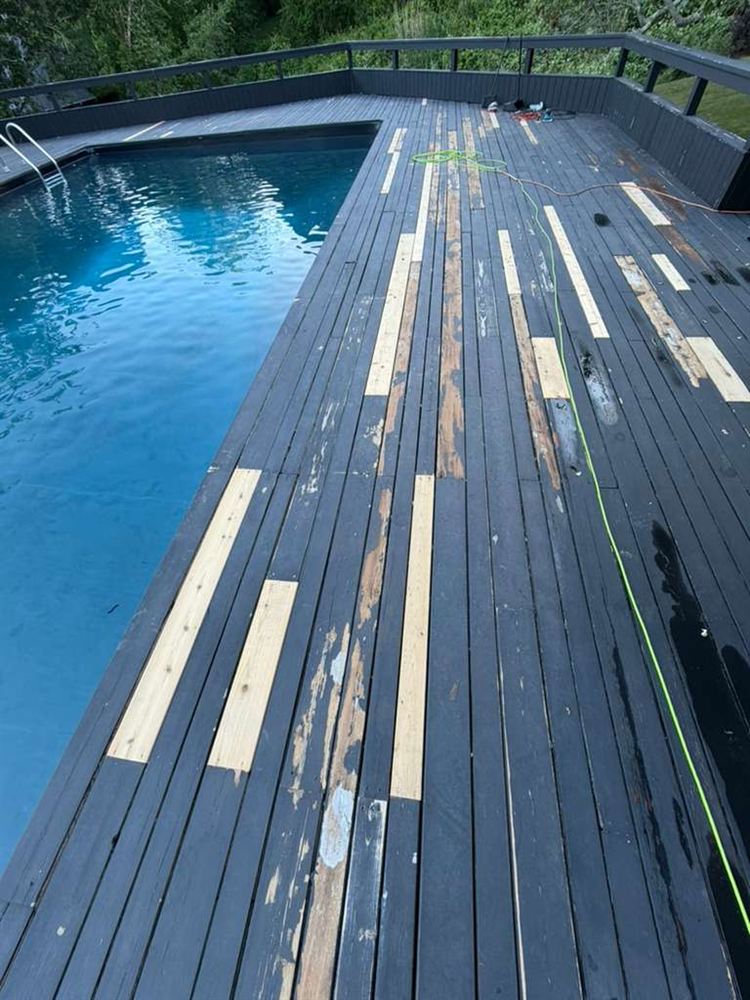
On a deck floor, the coating choice is close to settled. Penetrating oil-based stains soak into the wood and wear away gradually from the top down. Film-forming products — solid stains, deck paints, polyurethanes — sit on the surface and look excellent for about a year. Then water gets under the film through a foot-traffic scratch or an end grain, and it peels in sheets.
Peeled film is genuinely bad news, because the only way forward is stripping or sanding the entire deck before you can recoat. A penetrating stain that has worn thin just needs a wash and another coat. We use penetrating products on deck floors for that reason, and we will use a solid stain on railings and risers where traffic is not an issue and you want more color.
Cleaning is not the same as brightening
Restoring a grey deck is a two-chemical process, and skipping the second half is the most common mistake we see.
A percarbonate or hypochlorite cleaner lifts the grey, the mildew and the embedded dirt — but it also leaves the wood alkaline and often slightly darkened or blotchy. A brightener, which is an oxalic or citric acid, then neutralizes that pH and restores the wood to an even, natural tone. It also opens the grain so the stain actually penetrates.
Stain applied to un-brightened wood goes on unevenly and does not absorb properly. It is the difference between a deck that looks uniform and one that looks patchy in the first summer.
Moisture content decides the schedule
Wood has to be dry before it takes stain — generally under about 15% moisture content, which after a proper wash means waiting 48 hours of decent weather, sometimes longer in spring when nights are damp and dew is heavy.
This is the step that gets rushed, particularly late in the season when everyone wants the deck done before a weekend. Stain applied to damp wood sits on top instead of penetrating, stays tacky, and lifts. We schedule the wash and the stain as two separate visits with real drying time between them, and if the weather does not cooperate we move the stain day rather than push it.
Hardwood decks are a different job
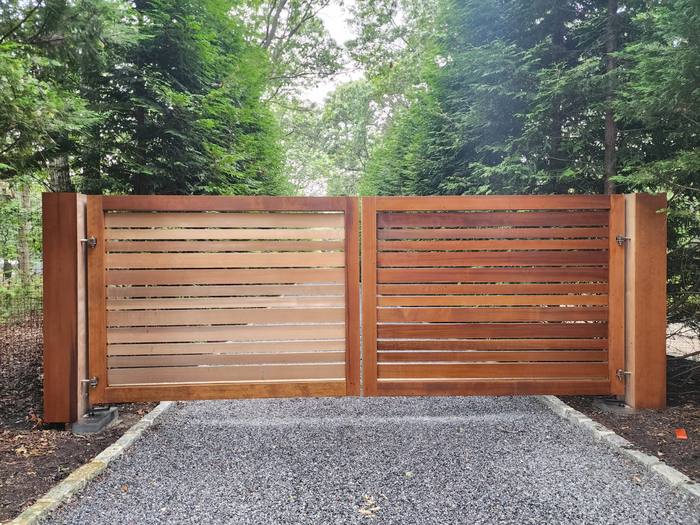
Ipe, mahogany and other tropical hardwoods are so dense that standard deck stain will not penetrate. They need hardwood-specific penetrating oils, and they need recoating more often — often annually — because very little product can get into the wood in the first place.
Left alone, they silver beautifully and will not rot. Plenty of owners choose exactly that. If you want the deep red-brown color held, it is a yearly commitment, and we would rather tell you that up front than sell you a coating that disappoints you in fourteen months.
How we work
Assess and estimate
We check the species, the condition, the boards, the fasteners and what is already on the wood, then price it in writing.
Repair
Loose or cupped boards re-fastened, popped screws set, splintered edges dealt with, any rotted board replaced.
Clean
Deck cleaner applied and agitated to lift grey, mildew and embedded dirt — low pressure, never blasted.
Brighten
Acid brightener neutralizes the cleaner, evens the tone and opens the grain for the stain.
Dry
A minimum of 48 hours of good weather. We check moisture content rather than guessing.
Sand and stain
Raised grain knocked down, then penetrating stain applied and back-brushed so it works into the wood instead of sitting on it.
Where we work
We are based in Hampton Bays and stain and seal decks across the whole East End, from Westhampton and Quogue to Southampton, East Hampton and Montauk. Estimates are free everywhere we serve, with no travel charge.