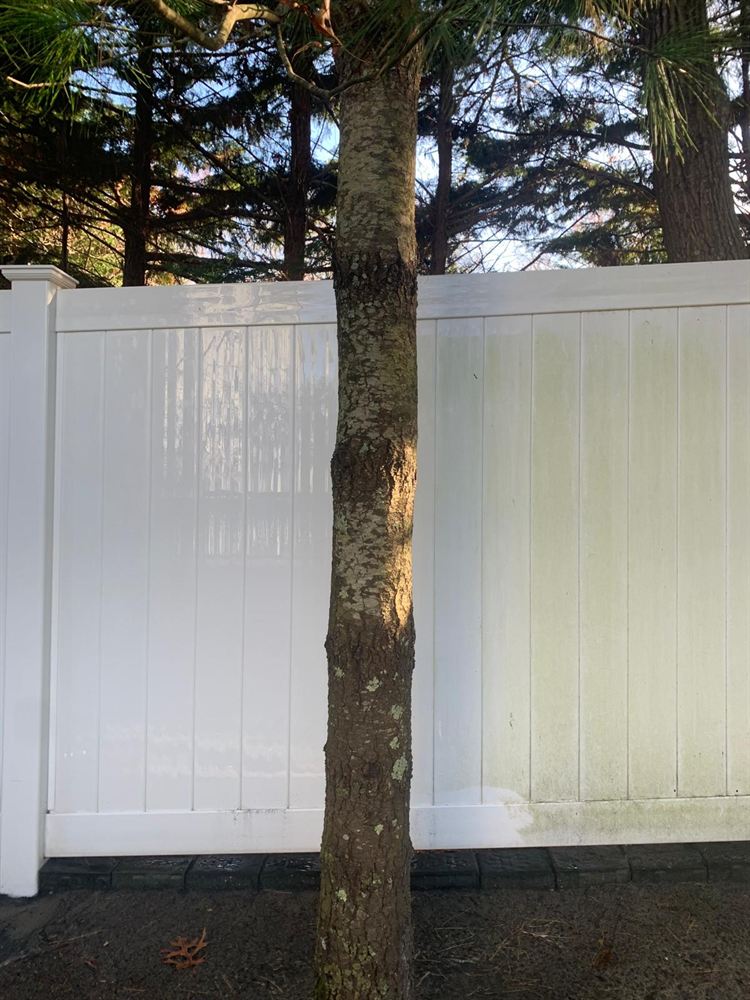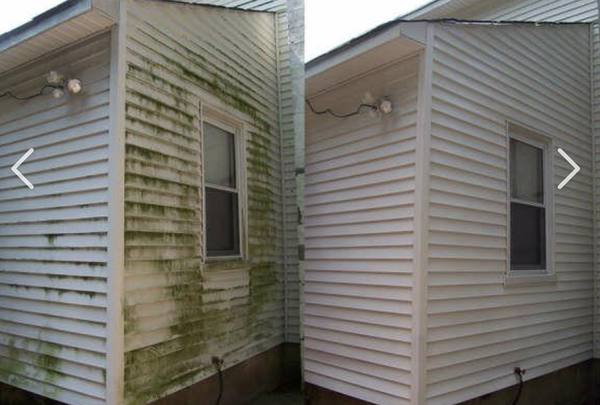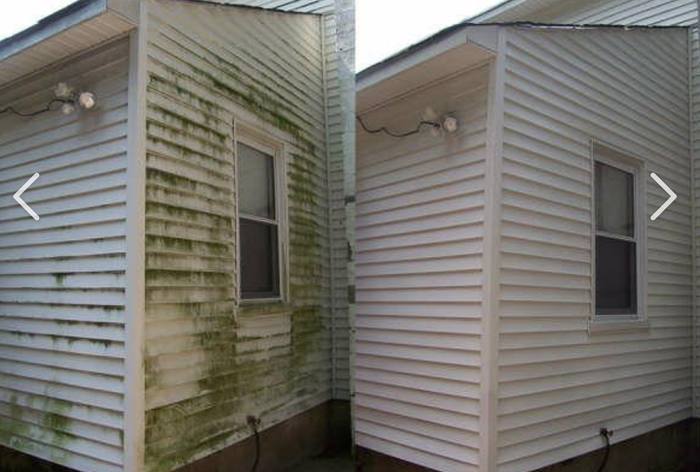
The green and black on the north side of a house near the water is not dirt. It is algae, mildew and lichen, and it has roots in the surface. Blasting it with pressure knocks the visible layer off and it returns within months, except now the wood is damaged too.
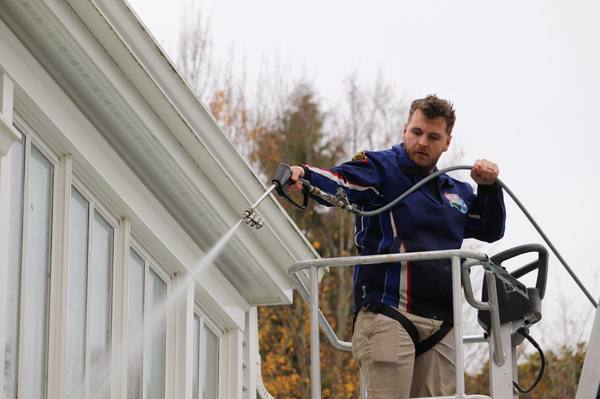
The correct approach on most residential surfaces is soft washing: a cleaning solution that kills the organism, dwell time to let it work, then a low-pressure rinse. The surface comes clean and stays clean far longer, and nothing gets destroyed in the process. We soft wash and pressure wash homes, decks, patios and driveways in Southampton, East Hampton, Westhampton and across The Hamptons.
Soft wash versus pressure wash
These are two different services and using the wrong one causes real, permanent damage. The distinction is simple: soft washing cleans with chemistry at garden-hose pressure. Pressure washing cleans with force.
- Soft wash — cedar shingle, painted siding, stained wood, roofs. High pressure on cedar raises the grain, drives water behind the shingles, and can cut visible lines into soft wood that never come out. Pressure on a roof takes the granules off the shingles.
- Pressure wash — concrete, brick, pavers, stone patios and driveways. Hard surfaces that can take the force, where ground-in dirt genuinely needs mechanical removal.
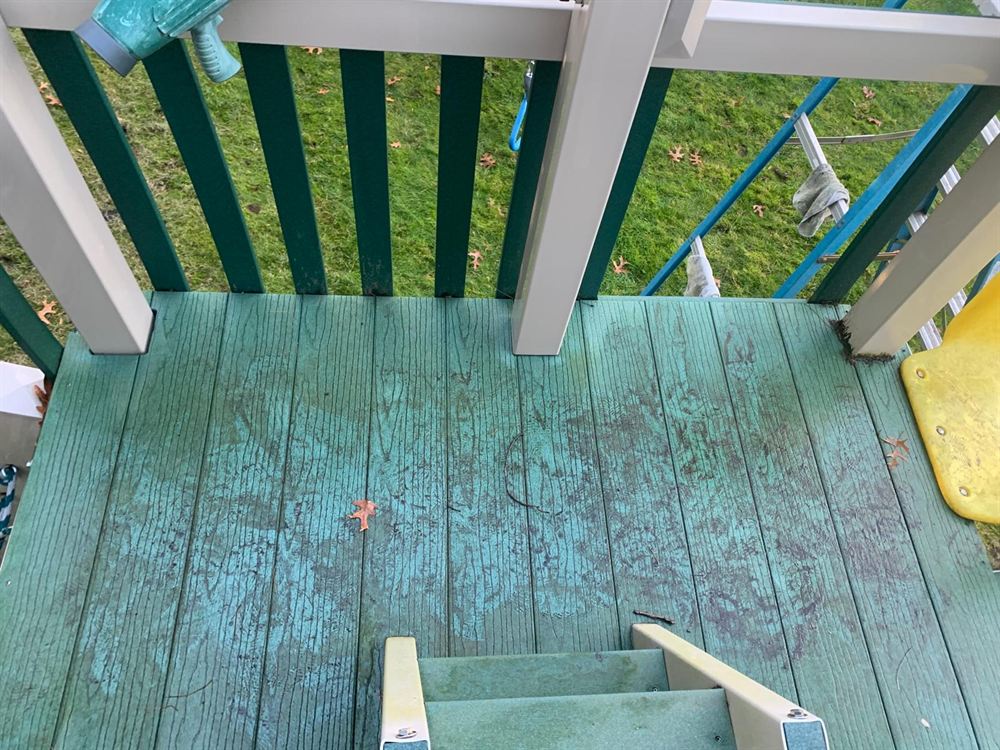
- Decks — low pressure, always. Even a pressure-treated deck will furr up and splinter under an aggressive tip. Deck cleaning is a chemical process with agitation, not a blasting job — and it is the first step of every deck staining job.
If someone quotes you a price to pressure wash cedar shingles, that is a warning sign. It is the most common cause of permanently damaged siding we get called out to look at.
Salt is the part people forget
Within a mile or so of the water, salt accumulates on every exterior surface. You cannot really see it, but it holds moisture against the substrate, it accelerates corrosion on hardware, railings and fasteners, and it interferes with paint adhesion.
This is why washing is included in every exterior painting job we do, and why an annual wash is worth more on the East End than it is inland. A house that gets rinsed down once a year holds its finish noticeably longer than one that does not.
Protecting what is around the house
Hamptons properties tend to have serious landscaping, and cleaning solution running off into a hydrangea bed is a genuine problem. Plantings get pre-wetted and covered, and rinsed again afterward — pre-wetting matters because saturated foliage absorbs far less of anything that lands on it.
Light fixtures, outlets and AC condensers get covered. Windows and doors get checked. We also look for the gaps that let water in: a failed window seal or a lifted piece of trim turns a wash into an interior water problem, so we find those first rather than after.
How we work
Walk the property
We identify surfaces, growth type, entry points for water, and what needs protecting.
Protect
Plantings pre-wetted and covered, fixtures and outlets sealed, furniture moved clear.
Apply solution
The right cleaner for the surface and the growth, applied at low pressure.
Dwell
The solution is given time to kill the organism. This is the step that makes the clean last.
Rinse
Low-pressure rinse from the top down, with the pressure matched to the surface.
Rinse surroundings
Plantings and hardscape rinsed again, and we walk the property with you.
Where we work
We are based in Hampton Bays and power wash and soft wash homes across the whole East End, from Westhampton and Quogue to Southampton, East Hampton and Montauk. Estimates are free everywhere we serve, with no travel charge.