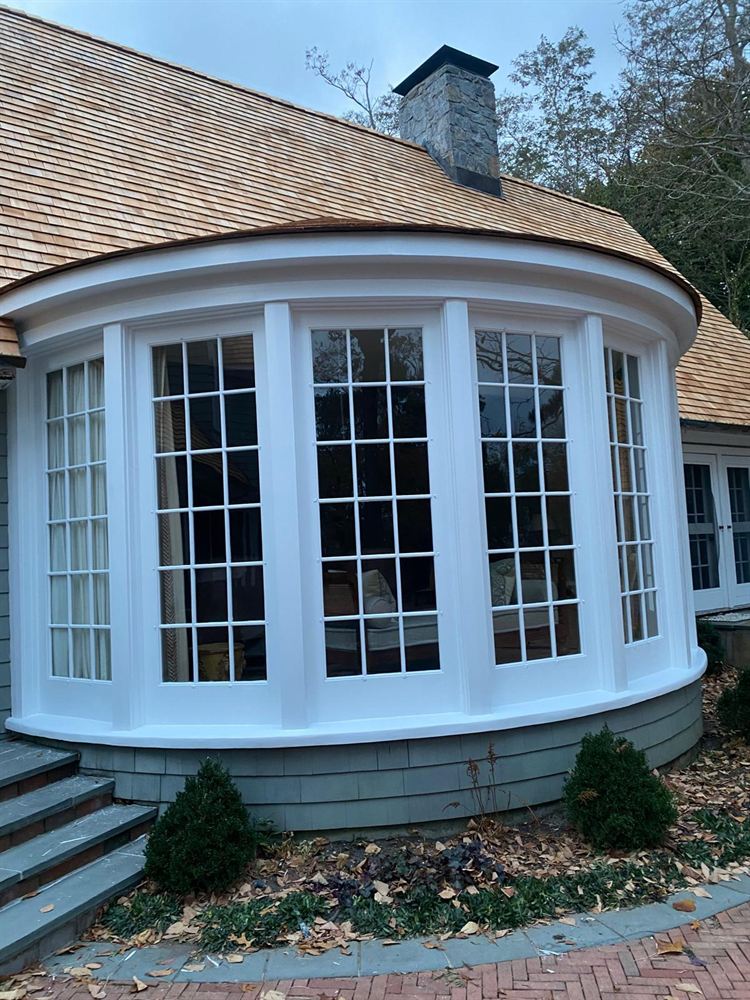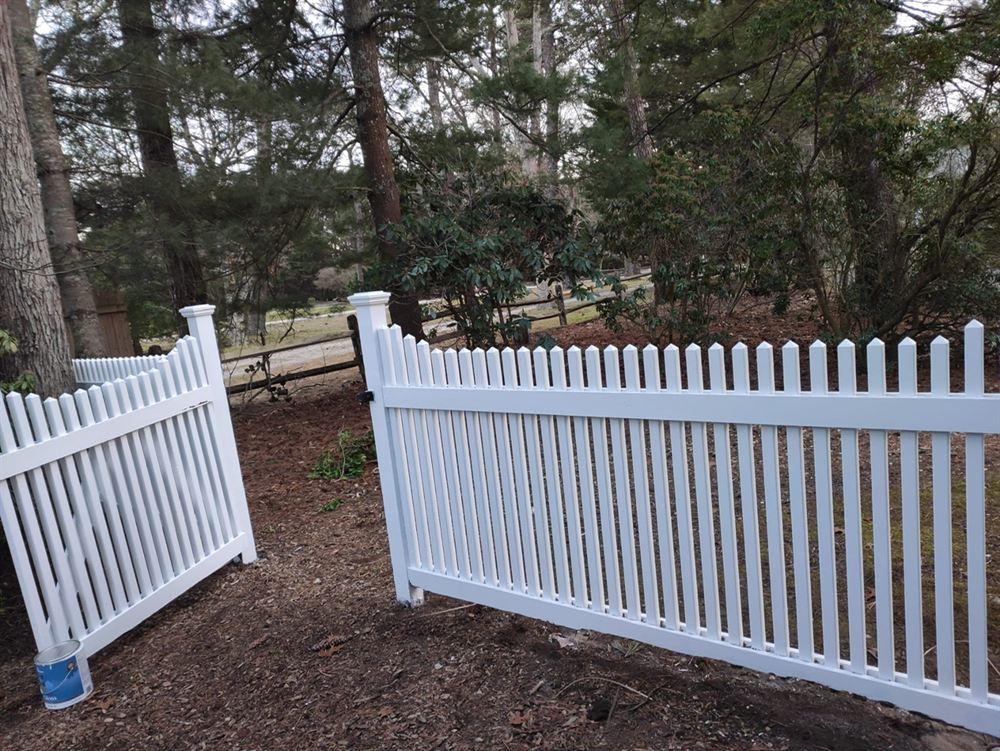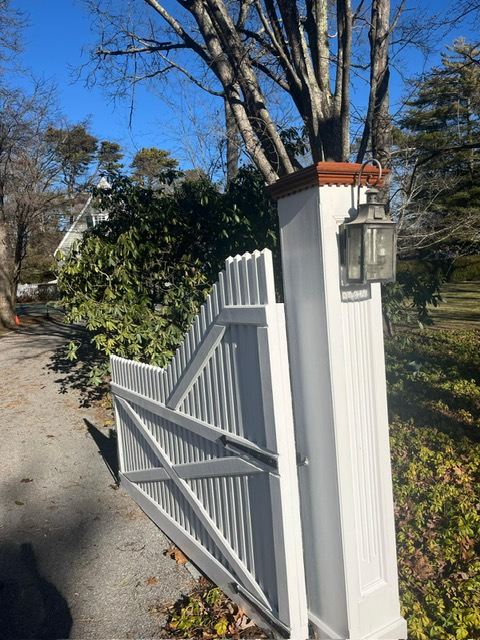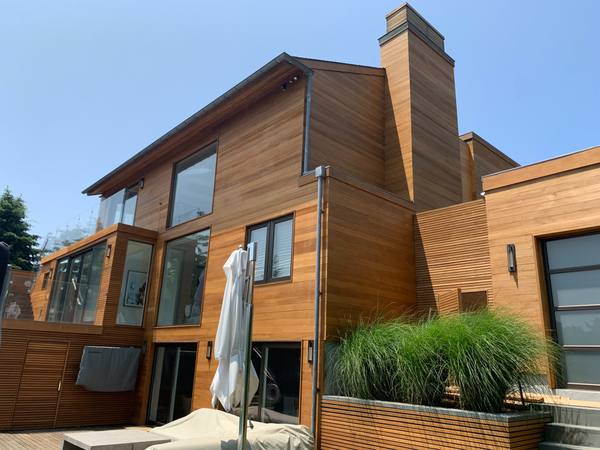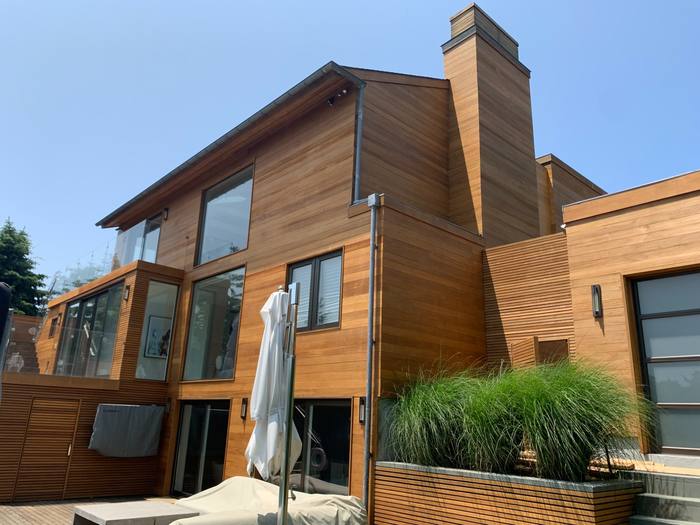
A house two blocks from the ocean in Montauk and a house five miles inland in Riverhead are not the same painting job, even if they look identical. Salt carried on the wind, UV coming off the water, and wind-driven rain break a coating down from the outside in. The same paint that lasts eight years inland can start failing on an exposed south elevation in three.
We are a licensed and insured exterior painting company based in Hampton Bays, painting and staining houses in Southampton, East Hampton, Amagansett, Montauk and across The Hamptons. Coastal exposure is the part of exterior work that matters and the part nobody talks about in an estimate. What follows is how we approach it.
Cedar shingle: the real decision
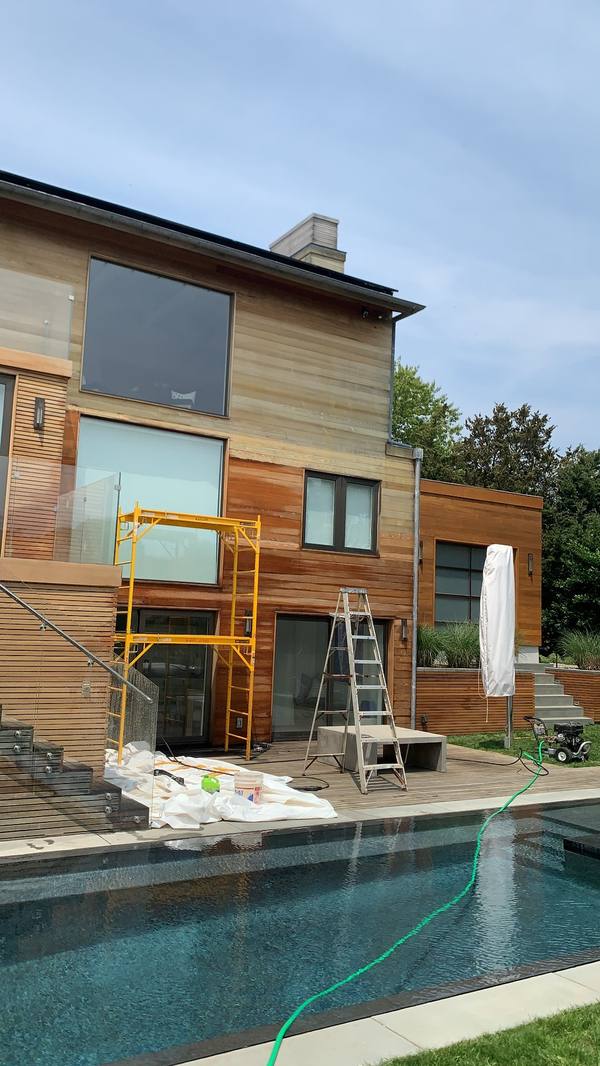
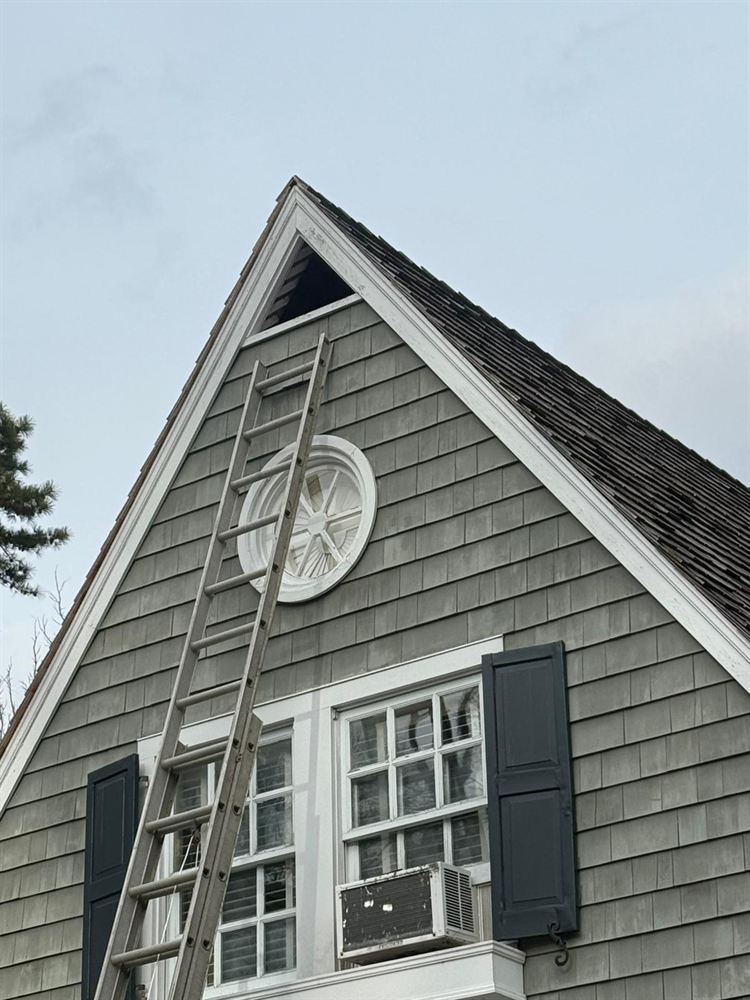
Most of the East End is cedar, and cedar gives you three genuinely different paths. Picking the wrong one is expensive because reversing it means stripping.
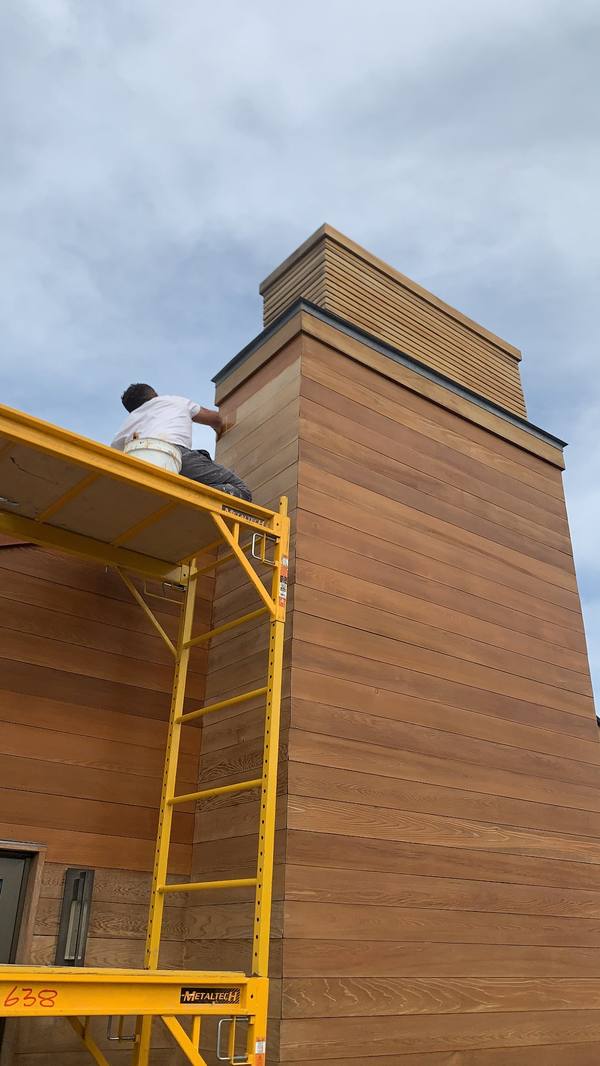
- Let it weather naturally — cedar silvers on its own. It looks right on a classic shingle-style house and needs almost nothing, but it weathers unevenly: the exposed elevations silver years before the protected ones.
- Bleaching oil — drives the silvering evenly and quickly, so the whole house goes to the same driftwood grey in one season instead of over a decade. It penetrates rather than filming, so it never peels.
- Solid stain or paint — full color and the most UV protection, but once cedar is filmed it is filmed. Recoating is straightforward; going back to natural is not.
Whichever direction you go, cedar bleeds tannin. Any film-forming coating over bare cedar needs a stain-blocking primer first, or brown streaks come through the finish within months. This is the single most common failure we are called in to fix.
Which elevation fails first, and why it matters
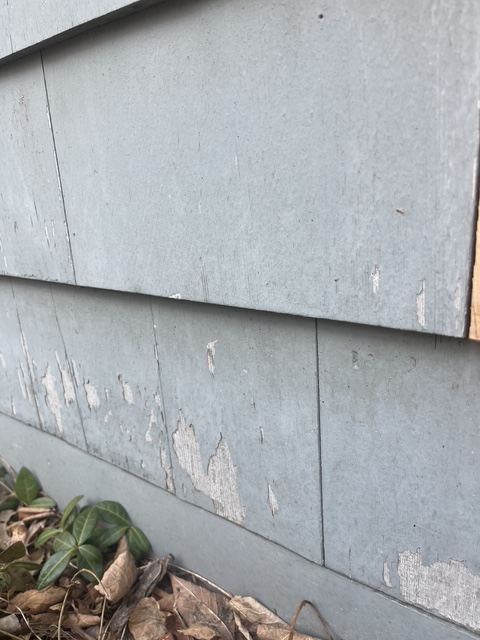
On almost every house on the East End, the south and west elevations fail first — they take the most UV and the most weather. The north side can still look fine when the south side is chalking and peeling.
That gives you a real option. If your budget does not cover the whole house this year, doing the exposed elevations now and the protected ones next season is a legitimate plan, not a compromise. We will tell you which walls are actually failing instead of quoting the whole envelope by default.
Timing: the window is narrower than people think
Exterior coatings need surface temperature above roughly 50°F, falling humidity, and enough hours before dew point for the film to set. On the East End that realistically means late April through June, and again September through late October.
July and August are workable but the hottest hours are not — a surface in direct afternoon sun can be 30 degrees above air temperature, and paint applied to a hot surface flashes off before it can level or bond. We work elevations around the sun rather than pushing through it. It is slower and it is the difference between a finish that lasts and one that does not.
Preparation is most of the job
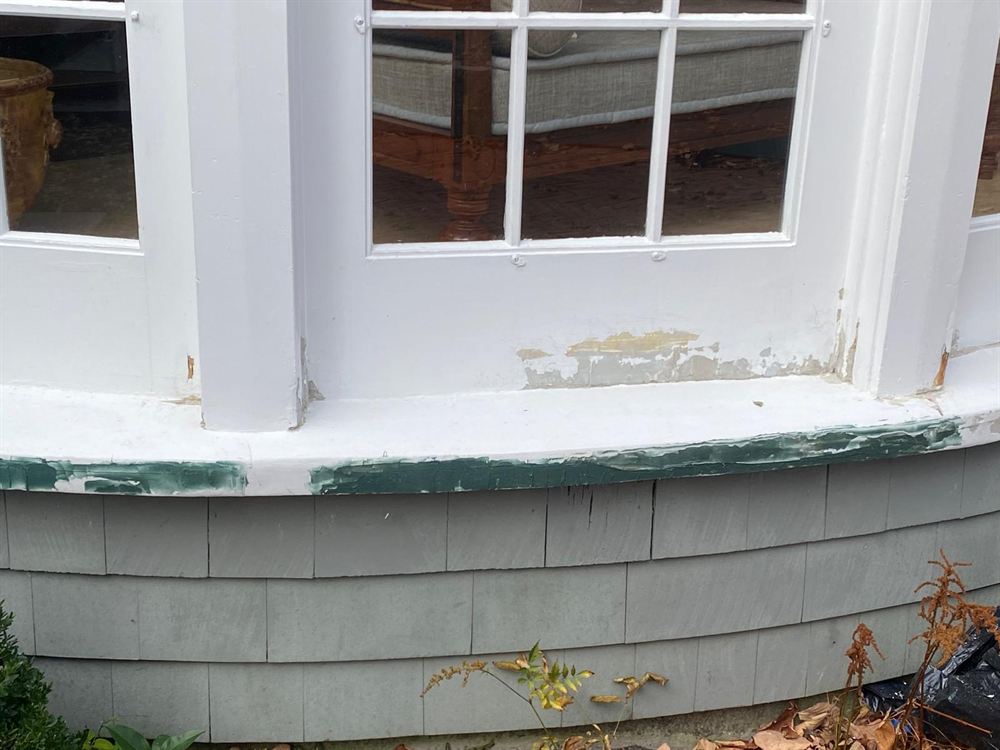
On exterior work, preparation is roughly seventy percent of the labor and effectively all of the longevity. Soft washing to remove salt, chalk and organic growth. Scraping and sanding failed coating back to a sound edge. Killing mildew rather than rinsing it. Replacing rotted trim or shingle before it gets coated over. Caulking joints with a flexible sealant that moves with the wood instead of cracking in the first cold snap.
An estimate that is notably cheaper than the others is almost always cheaper here. This is where the corners get cut, and it is invisible on the day the job finishes.
How we work
Inspection and written estimate
We walk every elevation, identify what is failing and why, and put the scope and price in writing.
Wash
Soft wash to strip salt, chalk, mildew and dirt without driving water into the siding.
Scrape, sand, repair
Failed coating removed to a sound edge, rotted trim and shingle replaced, surfaces sanded.
Caulk and prime
Joints sealed with flexible exterior sealant. Bare wood and all cedar spot-primed with a stain-blocking primer.
Finish coats
Two coats of a 100% acrylic exterior system, or penetrating stain, applied in the right conditions for the elevation.
Final walk and cleanup
We walk the property with you, and the site is left clean — no chips in the beds, no tape on the windows.
Where we work
We are based in Hampton Bays and paint and stain exteriors across the whole East End, from Westhampton and Quogue to Southampton, East Hampton and Montauk. Estimates are free everywhere we serve, with no travel charge.